Binder Jetting vs. CNC for Low-Volume Stainless Steel Housings
Binder jetting wins on geometry but CNC owns tolerance, finish, and strength for stainless housings.

A stainless steel housing lands on a bill of materials at the prototype or bridge-production stage, and two process paths look equally plausible on paper. Nothing about the part itself tells you which one to pick until you ask harder questions about geometry, tolerance, and quantity. Hardware teams facing this choice are matching process economics and capability to the specific characteristics of the part in front of them.
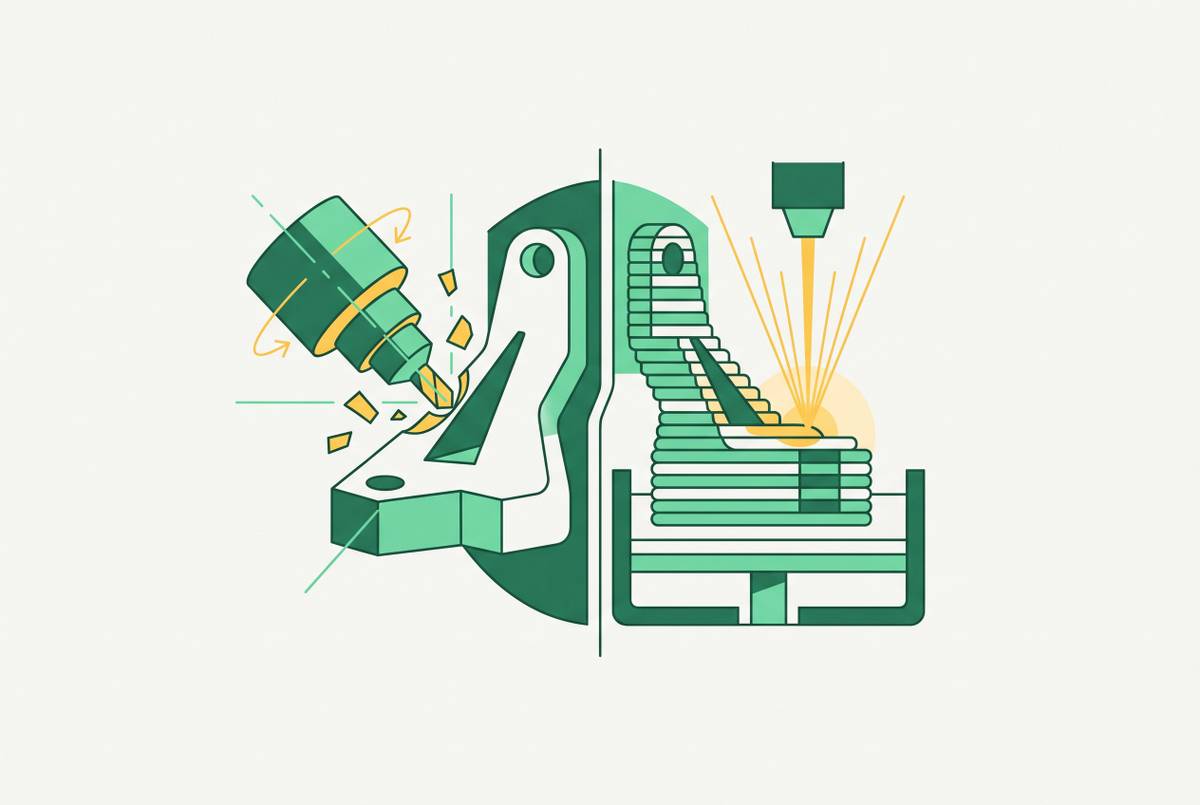
Both binder jetting and CNC machining are live, production-ready options for stainless housings, not a mature method against an experimental one. MET3DP's 2026 comparison treats binder jetting as something teams specify in production today, so it isn't a technology still waiting for its moment. The decision variables are concrete: geometry complexity, tolerance requirements, surface finish targets, mechanical property needs under load, and the number of parts needed per year. Each has a threshold where one process clearly wins, but most real housing designs sit in a middle zone, and the job is figuring out which variable is actually controlling the decision. A stainless housing rarely sits alone on a BOM. The process chosen for it tends to shape how the rest of the assembly gets sourced. Getting this call right early carries weight beyond the single part. The decision variables here have real thresholds that determine which process fits best, and this is exactly the kind of multi-process sourcing question hardware teams run into when building out a full mechanical BOM. If a platform can quote and manufacture across both binder jetting and CNC, you can pick the right process for each housing component without switching vendors mid-project.
How binder jetting actually produces a stainless steel part, and what the sintering step controls
Binder jetting doesn't produce a finished metal part straight out of the printer. What comes off the build plate is a "green" part held together by adhesive, and it only becomes stainless steel after a trip through a furnace that runs at a large fraction of the metal's melting point. That furnace step, sintering, is where the part's final strength, density, and dimensions get locked in, and it's also where most of the process's hardest constraints come from.
The sequence itself is straightforward. A printhead deposits liquid binder onto a bed of metal powder, layer by layer, gluing particles together only where the part geometry calls for it. Once the build finishes, you cure the green part, carefully depowder it to remove the loose material around it, and move it into a sintering furnace. High heat fuses the metal particles to each other, and standard 316L stainless routes reach near-full density once sintering finishes; for the small number of applications that demand the highest structural integrity, hot isostatic pressing, or HIP, can close any remaining internal pores.
The density numbers tell the real story of what sintering does to a part. Green density starts low right off the printer, but it climbs to roughly 97% for 316L once sintering is complete. Getting from one state to the other means the part shrinks substantially, and that shrinkage doesn't happen evenly. Distortion varies by axis and by geometry, so a part with uniform wall thickness in one direction might shrink differently than a thin feature nearby. That's the main source of dimensional risk in binder jetting: not the printing step itself, but how repeatably a given geometry sinters from batch to batch.
Binder jetting also skips support structures entirely, because the unbound powder surrounding each layer holds the part up as it builds. So you get a meaningful geometric advantage over laser powder-bed fusion, where support removal adds real post-processing cost and limits what geometries you can use. Internal channels and undercuts that would be a problem for laser-based printing come out of a binder jetting build with no support penalty at all. The printing stage itself also runs at room temperature, so you get larger build volumes and lower thermal residual stress during the print. The furnace then reintroduces thermal effects at a separate stage, after the geometry is already set.
None of this is academic. The anisotropic shrinkage and the batch-to-batch variability described here are the direct cause of the tolerance and surface finish numbers covered next. Those numbers are a direct consequence of what sintering does to a powder compact as it consolidates. If you understand sintering shrinkage, and the handling a green part needs before it ever reaches the furnace, you can read binder jetting's dimensional and surface finish figures correctly and judge which housing geometries will tolerate them. You can carry that kind of process-specific knowledge into smart material and process choices across a full mechanical BOM.
Where CNC machining holds the advantage for stainless housings: tolerance, finish, and material integrity
CNC machining is the right call whenever tight tolerances, sealing surfaces, or fatigue resistance are the controlling requirements on a stainless housing. It starts from wrought metal stock and holds geometry through mechanical cutting rather than through a thermal consolidation step, and that difference in origin is what makes its advantages so consistent.
Dimensional accuracy is where that advantage is sharpest. If a housing feature needs a precise fit, a sealing interface, or a tightly toleranced bore, that puts CNC in a different tolerance class entirely.
Surface finish separates the two processes just as clearly. Binder-jetted 316L reaches Ra 15 to 20 micrometers as-sintered, MET3DP's process data shows, while CNC-machined stainless reaches Ra 3.2 micrometers as a standard result, with Ra 0.8 micrometers achievable when a feature calls for it. Sealing faces, O-ring grooves, and mating flanges all need a surface finish that a binder-jetted part won't deliver without post-machining, which eats into some or all of the cost advantage binder jetting might have offered in the first place.
Mechanical properties follow the same pattern. The stress-strain curve for binder-jetted 316L sits below wrought 316L across the board: when HIP isn't applied, you get roughly half the initial yield stress and about 30% lower ultimate strength. Post-sintered 316L reaches ultimate tensile strengths of 450 to 580 MPa along the X and Y axes, so it covers plenty of housing enclosure uses, but it needs further processing for structures that see real fatigue cycling. Surface roughness on a sintered part compounds that weakness, lowering fatigue strength meaningfully under dynamic loads. HIP can close that gap, but it adds both cost and lead time, and at low volumes that extra step tips the economics back toward CNC.
CNC's design rules for stainless are well understood, and the cost of ignoring them is predictable rather than mysterious. Minimum wall thickness for steel in CNC is 0.8 mm, compared to 0.5 mm for aluminum, and stainless or titanium walls that run tall typically need 1.5 to 2.5 mm to stay stiff through the cut. Tolerance is the single biggest cost lever on a quote: tightening from a standard ±0.005 inch to a precision ±0.001 inch adds significant cost per feature, often simply because the application never needed that precision in the first place. Internal corner radii should measure at least a third of the pocket depth, because skipping them adds cycle time on the machine. Standardizing hole diameters across a design cuts down on tool changes. One medical device housing went from eight hole diameters down to four and saw a measurable drop in cycle time as a result. For 304 stainless sheet metal features, you need a minimum inside bend radius of 1.5 times material thickness.
Lead times for stainless run longer than aluminum but stay manageable. Standard custom stainless parts typically take 2 to 4 weeks, and complex geometries or secondary operations like heat treatment or grinding can push that out to 6 weeks. Rapid prototyping runs can compress that timeline down to a matter of days when the design is simple enough.
CNC's design-for-manufacturability rules, covering wall thickness, tolerance economics, corner radii, and hole standardization, are well-established, and the cost of violating them is predictable rather than surprising. Instant DFM feedback at the quoting stage, flagging a tolerance that's tighter than the application actually requires or a geometry detail that will spike cost, heads off expensive redesign cycles and keeps a housing project moving. When a stainless housing calls for tight tolerances, sealing surfaces, or fatigue-critical structural performance, CNC's mechanical accuracy and material homogeneity make it the obvious fit. Having both processes available through a single sourcing partner means an engineer can specify subtractive machining with confidence wherever it's warranted, without running into vendor limits.
Where binder jetting becomes economically and geometrically compelling for stainless housings
Binder jetting earns its place on a stainless housing BOM when geometry complexity runs high and most of the part's tolerances are moderate rather than tight. Its economic and design-freedom advantages hold up only when the housing isn't constrained by tolerance or finish at the interfaces that actually matter.
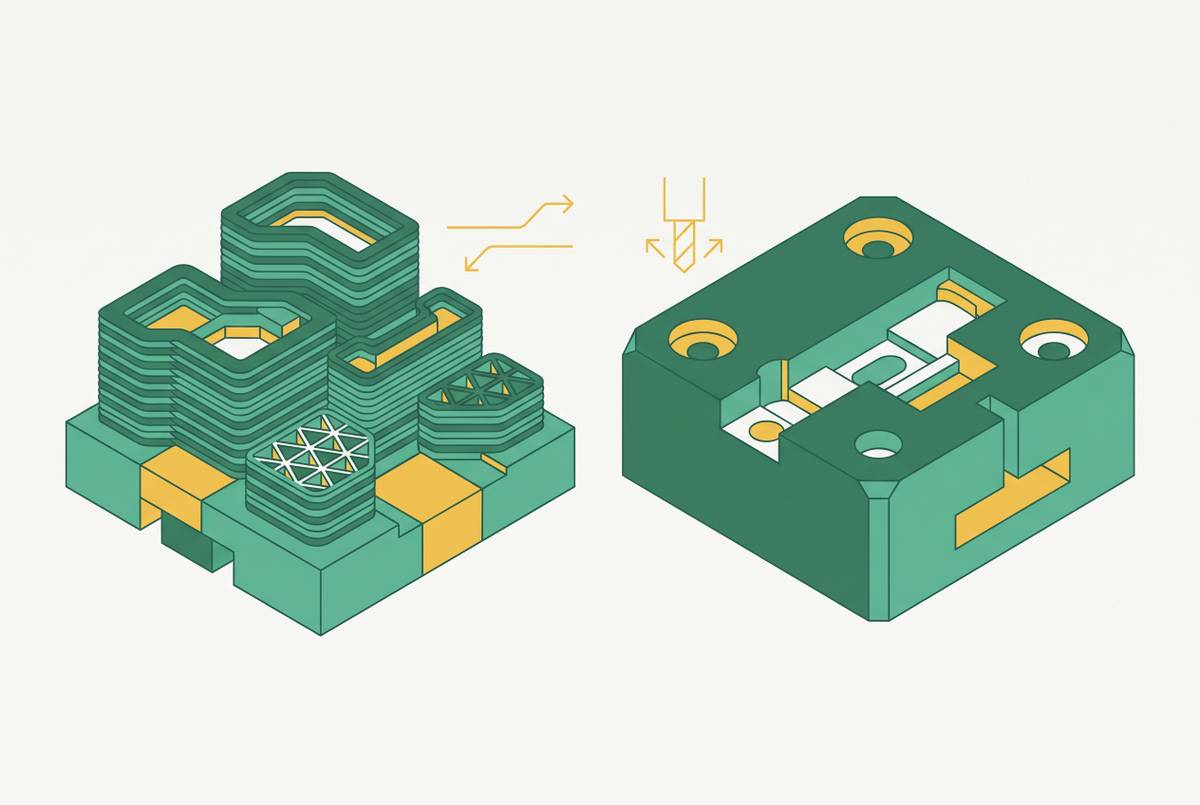
The geometry advantage here is structural. Internal channels, undercuts, and organic shapes that would otherwise call for electrical discharge machining or multiple CNC setups can come out of a single binder jetting build, with no support removal step afterward. Minimum wall thickness for metal binder jetting is 2.0 mm, a real constraint next to CNC's 0.8 mm floor for steel, but it's looser than most engineers expect going in. Unionfab's process guide points to internal cavities and lattice structures as the clearest cases where binder jetting produces geometry that CNC simply can't reach economically, or in some cases at all.
Volume economics follow a similar logic. Binder jetting's build speed reaches up to 50 cubic centimeters per hour, against 5 to 10 cubic centimeters per hour for laser powder-bed fusion, so you get dense nesting and batch efficiency that bring per-part cost down as order size grows. MET3DP's data points to a significant cut in lead time for a large stainless steel order run through binder jetting. Below whatever volume makes that math work for a given part, the decision turns on geometry rather than quantity, and the framework needs to be applied feature by feature rather than to the part as a whole. These volume figures are directional rather than fixed. Treat them as a prompt to run a detailed cost analysis for the specific part in question rather than as a lookup table that settles the question on its own.
Material cost and waste tilt the same direction. CNC machining cuts away a large share of the metal it starts with on complex geometries, but binder jetting builds close to the final shape, so you can recycle unused powder back into future builds. With stainless steel pricing as volatile as it's been, that waste gap becomes a real cost factor once a project moves past small pilot batches. Binder jetting powder also costs meaningfully less per kilogram than the powder laser powder-bed fusion uses, which matters when the comparison is between additive methods rather than against machining.
Lead time for binder jetting runs in days for the build itself, and total turnaround including sintering compares well against CNC for complex geometries, though furnace scheduling can introduce queuing delays that a fast print alone doesn't solve.
Where sintered mechanical properties land matters most in deciding whether binder jetting is even on the table. Post-sintered 316L reaching 450 to 580 MPa ultimate tensile strength covers a wide range of housing enclosures that never see fatigue cycling or pressure boundary loads. A university-published study cited in the research found binder-jetted 316L delivering tensile strength comparable to cast products, with better ductility than other additive methods produce. So you need to check whether the housing's real load case falls inside that range, rather than assuming either way without doing the check.
DFM rules diverge between the two processes, and violating the wrong set is expensive
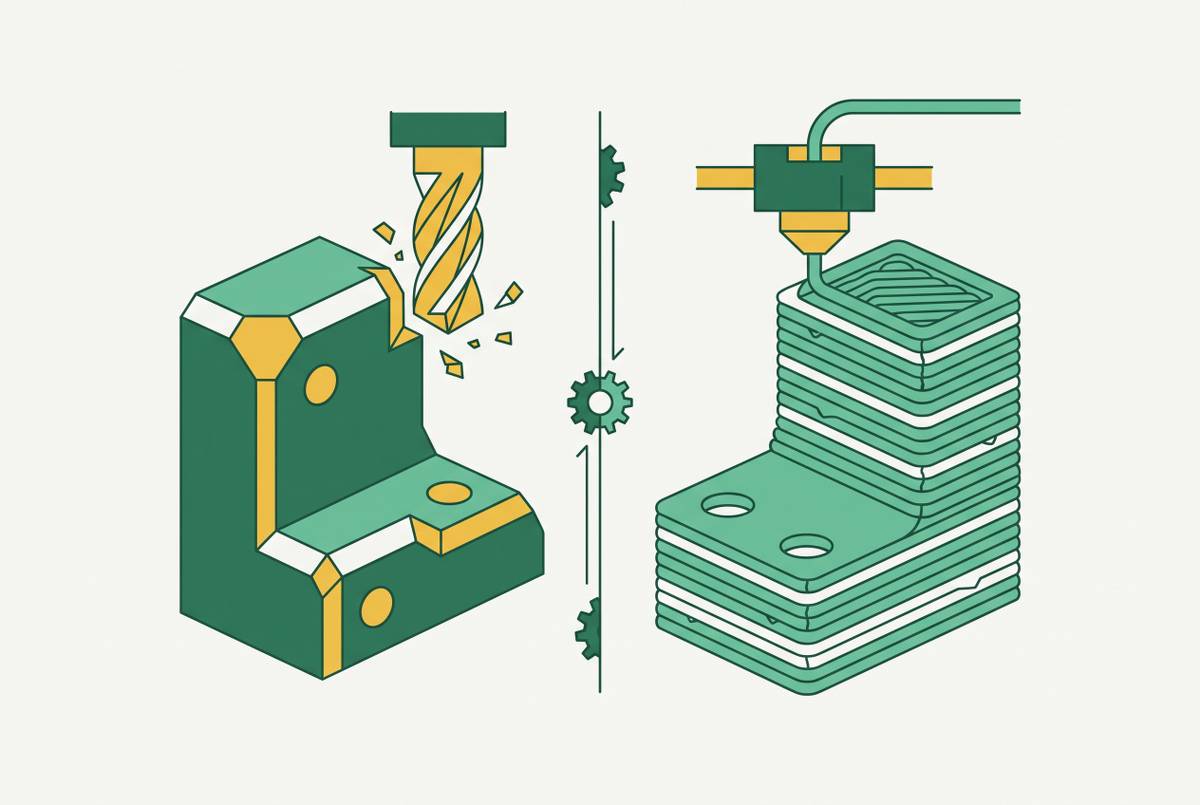
The costliest design mistake on a stainless housing project is designing to one process's rules and then sending the file out to be quoted against the other. Binder jetting and CNC each carry their own wall thickness floors, feature constraints, and file preparation requirements, and you can't negotiate any of them once a quote comes back. Get the mismatch wrong and the result is either a cost spike or a full redesign. For stainless housings, CNC machining holds the advantage on tolerance, finish, and material integrity, while binder jetting earns its place elsewhere.
CNC's rules for stainless housings start with wall thickness: 0.8 mm minimum for steel, rising to 1.5 to 2.5 mm for tall stainless walls that need to stay stiff through the cutting process. Tolerances should match what the application actually needs, because tightening beyond that adds cost without adding function. Corner radii, hole standardization, and bend radius all follow the same logic covered earlier: each one either saves machine time or costs it, and the rules don't bend by part.
Binder jetting's rules run differently because the part has to survive printing, depowdering, and sintering before it's a finished shape. A 2.0 mm wall thickness floor protects a green part from breaking during handling and from distorting unevenly as it shrinks in the furnace. Designing thin walls meant for a CNC toolpath into a binder-jetted part risks exactly the anisotropic shrinkage and dimensional drift described earlier, since the part simply isn't built to survive that path.
The practical move for any engineer sourcing a stainless housing is to settle on the controlling variable, tolerance, finish, mechanical load, or geometry complexity, before committing a design to either process's rule set. A design can't serve both masters at once. Picking one early, and designing to its specific constraints from the start, is what keeps a stainless housing project on schedule and on budget.
Sources
- Metal Binder Jetting: Your Complete Guide [+ Key Comparisons]
- Design for Manufacturability: CNC Machined Metal Parts - Complete Engineering Guide
- Applying Binder Jetting Technology to 316L Stainless Steel Materials and Testing Its Mechanical and Dimensional Properties Depending on the Printing Method
- (PDF) Sintering anisotropy of binder jetted 316L stainless steel: part I – sintering anisotropy
- Metal PBF vs Binder Jetting in 2026: Throughput, Density and Cost Trade-offs - Met3DP Blog
- Binder jet 3D printing of 316L stainless steel: A Taguchi analysis of the dependence of density and mechanical properties on the printing parameters - ScienceDirect