Roll Forming for Extruded-Profile Alternatives in Sheet Metal
Roll forming handles harder materials and thinner walls where extrusion hits its limits.

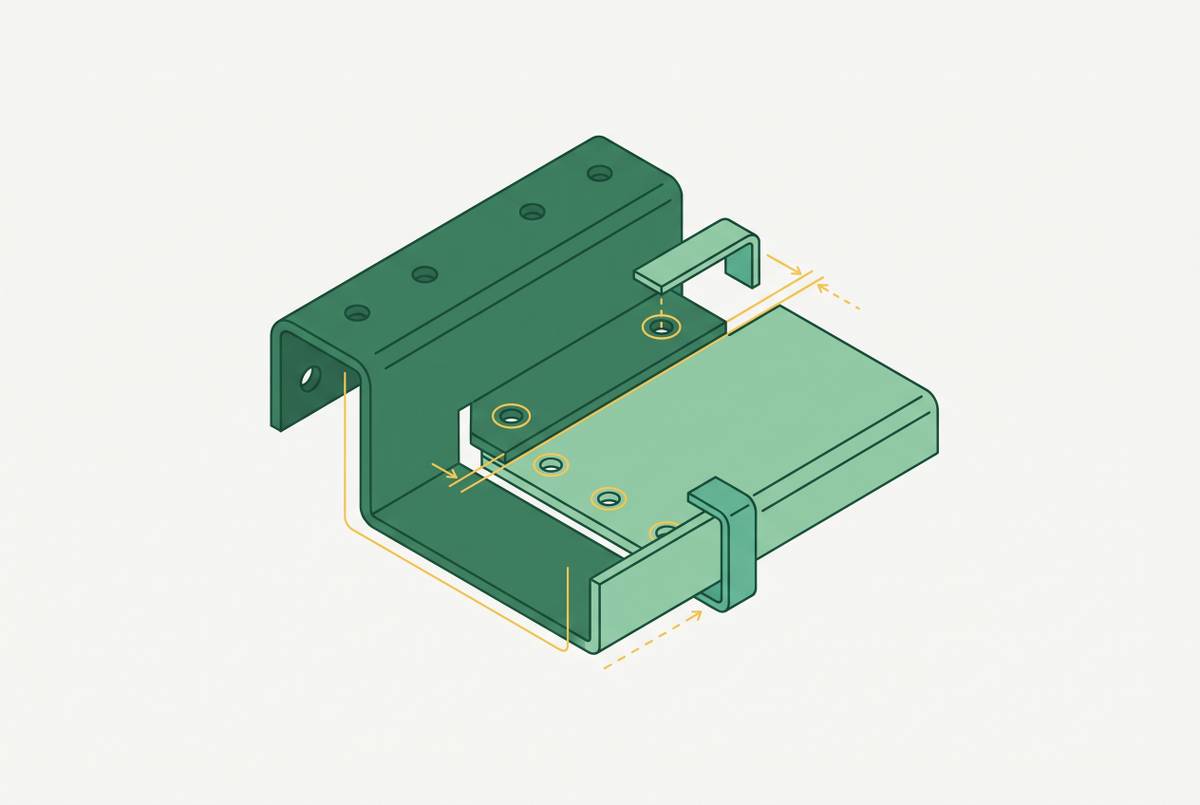
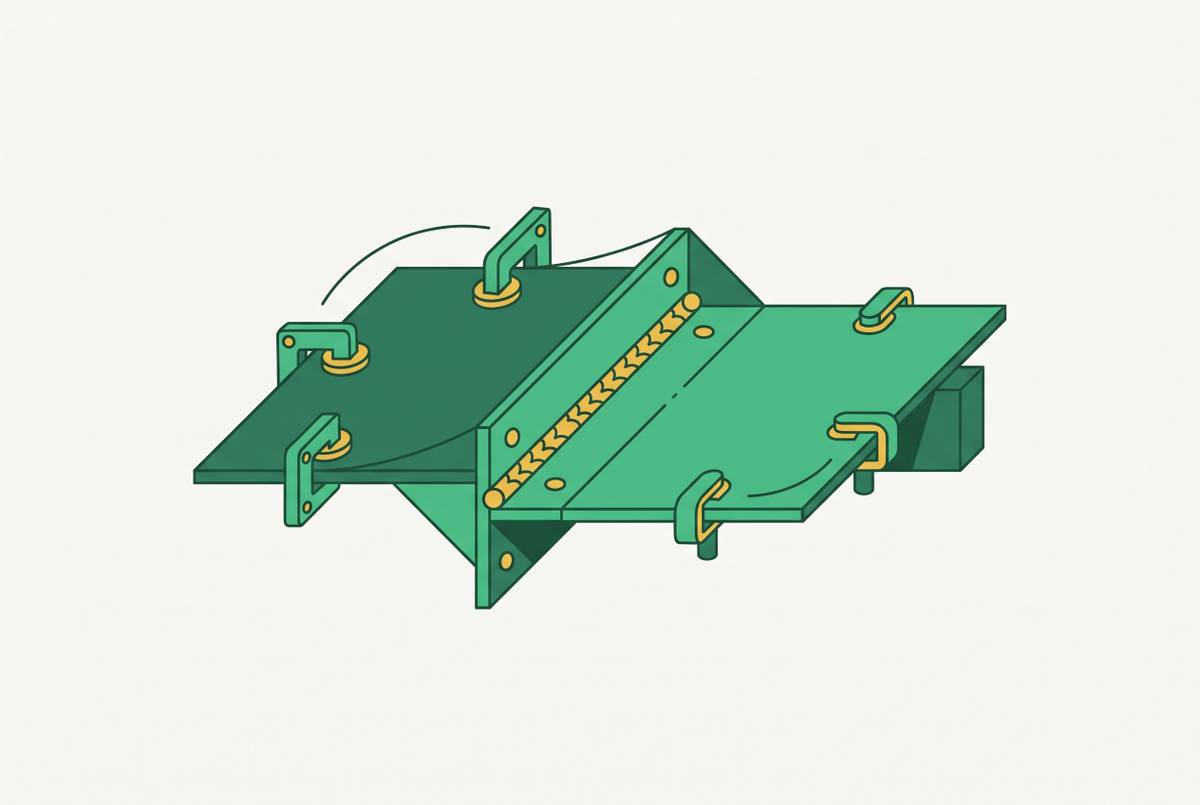
Roll forming takes flat coil stock and bends it into a constant cross-section shape, cold, one pass at a time, through a line of roll stands. For engineers who default to extrusion whenever they need a long constant-profile part, that's a mistake in a growing number of cases. The two processes solve overlapping problems, but the conditions that favor one over the other are specific enough to write down, and this piece does exactly that.
Start with the mechanics. Coil strip feeds through a series of roll stands, and each stand bends the material a little further toward its final shape. A plain angle bracket might only need three or four stands. A profile with hemmed edges, multiple bend directions, and tight lock seams can take many stations before the shape is done. The output isn't a batch of discrete parts, it's continuous profile, cut to length after forming. And if the design calls for a closed cross-section, like a tube, that gets welded in-line as the strip edges come together at the last stand. No separate welding cell, no re-fixturing.
How extrusion works
Extrusion works the opposite direction, mechanically. Instead of incrementally bending flat stock, extrusion pushes a heated billet through a shaped die, and the die opening is what defines the final cross-section. It's a subtractive-shaping mindset applied to a forming process: the die does the work in one motion instead of twenty.
This suits softer, more ductile metals well: aluminum, especially the 6xxx series, along with tin, copper, magnesium, zinc, and some low-carbon steels. Heat-treatable aluminum alloys also gain strength after extrusion through aging, and 6061 in the T6 condition can hit tensile strength above 310 MPa. That's a real number, and it explains why so much structural aluminum extrusion exists in aerospace and automotive framing.
For low-complexity profiles, extrusion dies are often a simpler single-tool investment compared to a multi-stand roll form tool set. That's the extrusion pitch in short: simple tooling, strong heat-treated aluminum, and a shape defined once by a die rather than built up over a dozen forming stations.
The five conditions that make roll forming the better process choice
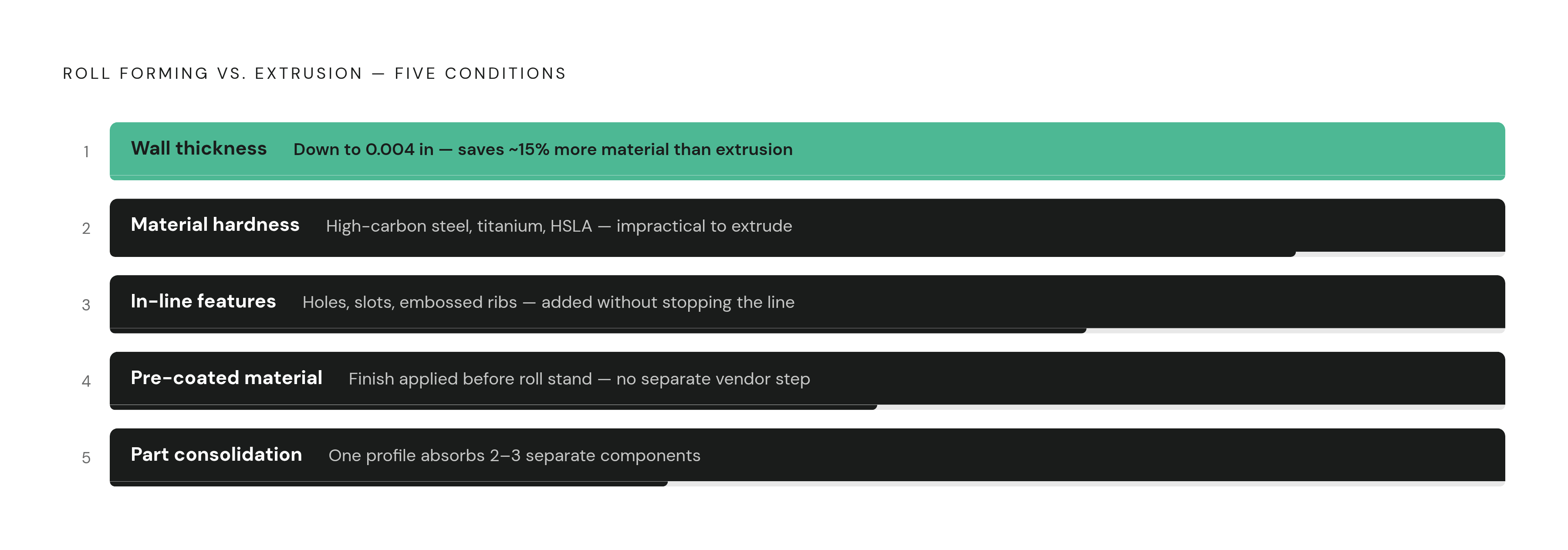
Extrusion is a tool that works well for many applications. It's just not always the right tool, and five specific conditions tend to tip the decision toward roll forming.
The material is harder than extrusion can comfortably handle. High-carbon steel, titanium, stainless, and HSLA grades are either impractical or flatly impossible to push through an extrusion die at the pressures involved. Roll forming doesn't have that ceiling. Harder material means more springback and more forming stands to get the bend to hold, but it doesn't block the process the way it blocks extrusion.
Wall thickness needs to be thin. Extrusion has a practical floor on how thin a wall can get before the die can't reliably fill. Roll forming, by contrast, can work sheet stock down to 0.004 inches. Thinner walls also mean less material used per part, and roll forming can save roughly 15% more aluminum than extrusion on a comparable profile. For anything weight-critical, aircraft skins, automotive body panels, that difference compounds fast across a production run.
Features need to live along the profile length, not get added afterward. Holes, slots, embossed ribs, pierce-clinch nuts, all of that can go in-line during roll forming, punched or formed at the appropriate station without stopping the line or re-fixturing the part. One roll-formed profile can absorb what would otherwise be two or three separate components bolted or welded together later. That's a part-count argument, and part count drives assembly labor, inventory complexity, and failure points. Extrusion can't do this in-process. Any hole or feature has to be added after the profile comes off the press, as a secondary operation.
The part needs to start life as pre-coated or pre-painted material. Roll forming works directly on pre-coated or pre-finished coil stock, including various surface treatments applied before the material reaches the first roll stand. The finish is baked into the raw material order, not applied after the part is formed. Extrusion runs the opposite way: anodizing, painting, or powder coating happens after the shape exists, which adds a process step and gets harder to control evenly across a complex profile.
When extrusion wins over roll forming
None of this makes extrusion obsolete, and forcing roll forming onto a job that doesn't fit it wastes tooling money.
Structural strength is the clearest case. When 6061-T6 or a similar heat-treatable aluminum is specified because the part needs to carry load efficiently, extrusion's die-defined cross-sections do something cold-formed sheet can't match at the same cross-sectional area: they concentrate material where the load path needs it. Combine that geometric efficiency with a tensile strength above 310 MPa in the T6 condition, and extrusion wins on structural performance.
Depth is another hard limit. Roll forming generally tops out under 4 inches of profile depth, and going past 6 inches is rare. Deep structural shapes, heavy I-beams, large box sections, those stay in extrusion or hot-rolling territory because roll forming simply can't reach that depth with the same tooling logic.
Volume affects tooling economics early in a program: roll tooling is expensive to build, and that cost only pays off across a long run. Roll tooling is expensive to build, and that cost only pays off across a long run. For a one-off prototype or a short pre-production batch, extrusion dies can cost less and take less lead time. Honestly, at true prototype scale, neither process might be the right call. CNC machining from bar stock or plate, or bending sheet on a press brake, often gets a usable part faster and cheaper than committing to tooling of either kind.
Last, geometry that changes along the profile's length rules out roll forming. Tapers, twists, cross-section transitions, any of that breaks the core assumption of the process, which is a constant shape from one end to the other. Extrusion can sometimes handle limited variation with die changes; machining handles it without much fuss.
Material selection for roll-formed profiles: which alloys and grades work
Not every alloy behaves the same way under a roll former, and picking the wrong one is a common design-phase mistake.
In aluminum, 3xxx series (manganese-alloyed) forms easily and resists corrosion well, making it a natural fit for roll forming. The 5xxx series, alloyed with magnesium, steps up in strength and corrosion resistance while staying weldable, which makes it the pick when a part needs both structural performance and a weld joint downstream. The 6xxx series is where engineers trip up. It's the workhorse of extrusion and CNC machining, but it's harder and less forgiving in a roll former. An engineer used to specifying 6061 by habit needs to stop and reconsider once the process shifts to roll forming. 5052-H32 bends more readily than 6061-T6 in sheet form, and many shops can hold a tighter inside radius on 5052. That difference alone opens up more cross-section design freedom than sticking with a 6061 assumption carried over from extrusion.
Steel follows its own logic. Mild steel is the reference material most roll forming equipment gets rated against, so capability specs quoted by a shop are usually mild-steel numbers. Stainless and HSLA steels are absolutely roll-formable, but they take more force. A stainless strip might need roughly twice the forming force of the same geometry in mild steel. For the highest-strength steels, keep the minimum bend radius at three to four times material thickness, or the bend risks cracking instead of forming cleanly.
Coatings are where roll forming has a quiet edge. Galvanizing, vinyl lamination, cladding, painting, all of it can be applied to the coil before it ever reaches the first roll stand, and it survives the cold-forming process intact. That's a real logistics advantage over extrusion, where finishing is a separate vendor step added after the shape is done. The coating schedule becomes part of the raw material purchase order instead of a second line item on the project timeline.
Nickel, titanium, and copper are processable too, but they're not default assumptions. Each needs its own validated tooling and force calculations before a shop commits a job to the line.
DFM rules engineers must apply when designing for roll forming
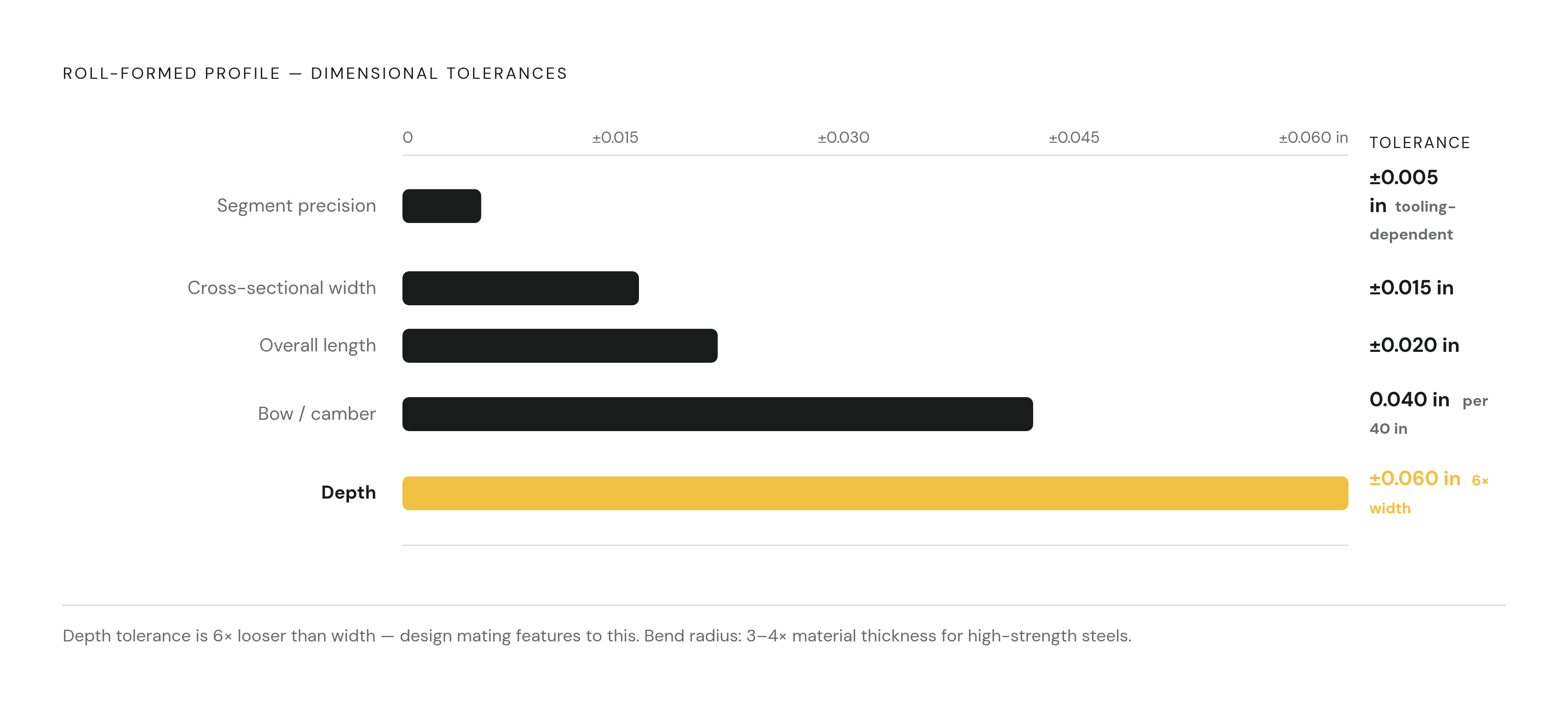
Design tolerances for roll forming the way the process actually behaves.
Cross-sectional width typically holds to about ±0.015 inches, and depth to about ±0.060 inches. Design clearances and mating features around those numbers, not tighter ones. Overall profile length can usually hold to ±0.020 inches, and specific segments along the profile can tighten up to ±0.005 inches if the tooling is built for precision at that location. Bow and camber, the horizontal and vertical sweep along the length of the part, should stay under 0.040 inches per 40 inches of length by standard tolerance. That number matters a lot on long structural profiles that need to sit flat against a mating surface.
End flare deserves its own mention because it trips up engineers who haven't seen it before. When a formed profile gets cut to length, residual stress built up during forming releases at the cut ends, and the ends flare slightly. That's not a defect, it's physics, and an experienced roll forming shop controls it through tooling design and process setup. The engineer's job on the design side is simpler: leave relief near the profile ends, or avoid putting a critical mating feature right at the cut line where flare shows up.
Bend radius rules follow the grain of the strip. Bending perpendicular to the rolling grain direction allows a tighter radius with lower cracking risk. Bending parallel to the grain, especially in a harder temper, raises that risk. For the highest-strength steels, keep the minimum inside radius at three to four times material thickness. And where possible, keep every bend in the profile at the same radius and the same direction. That single choice cuts stand count, tooling cost, and setup time all at once.
Stand count is really a complexity tax. Every time a bend direction changes, that's another forming station, and more stations mean more tooling investment and longer setup before the line runs production. Thicker or less ductile strip gets deformed less per pass, so more stands are needed to reach the same final shape compared to a more ductile material. Cutting even one bend out of a cross-section can meaningfully lower tooling cost, so it pays to loop in the roll forming shop early, before the design is locked, and let them weigh in on where the profile can be simplified.
Tooling cost, production volume, and the total-cost calculation that matters
Roll tooling costs more than a basic extrusion die, and there's no point pretending otherwise. A roll form tool set has to account for every stand in the line, sometimes 20 or more, while a simple extrusion die is often a single tool.
But that comparison only holds at low volume. Once a program moves into real production quantities, the equation flips. Roll forming runs continuously and fast, and because features like holes and slots get added in-line, secondary operations shrink or disappear. Per-unit cost drops steeply as volume climbs, in a way a simple die-cost comparison misses completely.
There's also a schedule cost that rarely makes it into the first quote. Aluminum extrusion typically needs an aging or heat-treatment step after forming to reach its final strength, and that adds lead time to every batch. Roll-formed profiles skip that step. For a program running on schedule pressure, that time difference isn't a footnote, it's money. Add in the roughly 15% material savings roll forming holds over extrusion on comparable aluminum profiles, and at production scale, that yield difference is a genuine cost line, not just something to mention in a sustainability report.
Sourcing a roll-formed profile alongside machined, welded, or cast components
A roll-formed profile rarely lives alone on a bill of materials. It's usually one line among machined brackets, welded subassemblies, and maybe a cast housing, and the sourcing decision has to account for how those parts fit together.
That means the roll forming vendor needs the same information any other process partner needs: material spec, coating requirement, tolerance callouts on the print, and how the profile interfaces with the parts around it. If the profile has a weld joint waiting for it downstream, the alloy needs to be weldable, which points toward something like a 5xxx-series aluminum rather than a 6xxx assumption carried over out of habit. If a machined bracket bolts to the profile, the ±0.015 inch width tolerance and the ±0.060 inch depth tolerance need to be accounted for in the mating interface from the start, not discovered after the first article comes off the line.
The practical move is treating the roll-formed part as its own process discipline with its own tolerance stack, rather than assuming it behaves like a machined or extruded part sitting next to it on the same drawing tree. Get the roll forming shop involved during the design phase, before tooling gets cut, so bend radius, grain direction, and end flare get worked out on paper instead of on the shop floor after the tool is built and the mistake is expensive to fix.