Material Cost Contribution to Per-Part Price in CNC and Casting Processes
Material's true cost shifts with volume and machinability, not just price per pound.
Material’s contribution to per-part price in CNC machining and casting changes with quantity, process, material grade, and geometry. Engineers can control more of the finished-part price when they understand which costs shrink with volume, which remain, and which the design creates before a supplier ever quotes it.
Why material cost behaves differently than engineers expect
A quote comes back far higher or lower than expected, and the material line does not explain the surprise. The stock price looked easy to work out, so the finished-part price seemed as though it should be easy to work out too. But buying the metal is only one part of buying the finished component. The rest of the price reflects the work needed to turn that metal into an acceptable part. That is where the intuitive link between expensive material and an expensive part starts to break down.
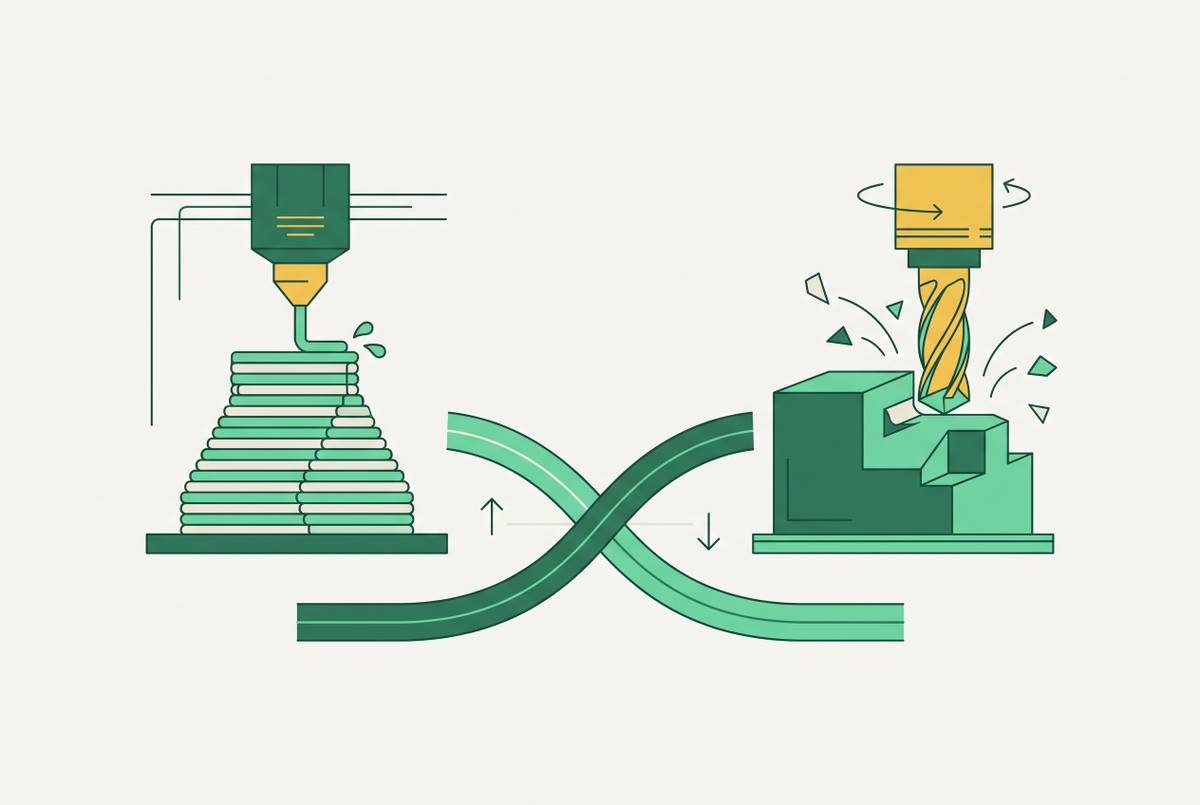
The CNC cost formula separates those jobs into material, machining time multiplied by the hourly rate, setup, and finishing. Those terms do not respond to quantity in the same way. Setup is spread across the batch, while stock and cutting time remain costs of each additional part. Material choice also reaches beyond the stock line because it affects the work needed to machine the part.
This distinction explains why a material upgrade can look almost harmless on a prototype quote and become consequential in production. The material has not necessarily become more expensive. Instead, the other costs have changed their weight in the total. Understanding that shift is the first step toward knowing whether the next cost decision belongs in purchasing, production planning, or CAD.
How setup cost dominates at low quantity and why that suppresses material's share
Before a CNC part ships, the job needs fixtures, programming, and first-part inspection. These are costs of getting the job ready. A single-piece order must carry that preparation on its own. With a larger batch, that cost is spread across many parts. So setup and programming make up most of the cost of small orders even when the raw material is fairly cheap.
Komacut says those costs of getting the job ready stay the same whether the batch has one piece or a thousand. Each part carries less of the same initial bill at higher quantity. RiAlto Manufacturing identifies quantity as the single biggest lever for lowering CNC per-part cost because setup and programming can be spread across the batch. Once that burden falls, the cost of an additional part is mostly material and cycle time.
A harder-to-machine grade may add cost without changing the total enough to attract attention because setup still overwhelms the comparison. That makes the decision look smaller than it will be at production volume. A prototype quote answers what it costs to make the prototype, leaving open the question of what the selected grade will contribute to the production price. Treating those as the same question is how a small-looking specification becomes a lasting cost penalty.
How material's share of per-part cost rises as volume scales in CNC machining
As batch size grows, the setup charge per part shrinks, but every part still needs stock. Material therefore becomes a floor that spreading fixed costs cannot remove. Its share of the total can rise even as the finished-part price falls. There is no contradiction in that result. The material bill has become more visible because the preparation bill is no longer masking it.
Da He Precision’s cost breakdown shows material moving from a small minority of single-piece cost to a substantially larger share at high volume. Setup and programming shrink in inverse proportion to quantity, while machine time remains the dominant component in that example. Material can thus take up more of the cost without becoming the largest line on every production quote. It becomes a larger remaining cost, and therefore a more important target for decisions about stock, grade, and waste.
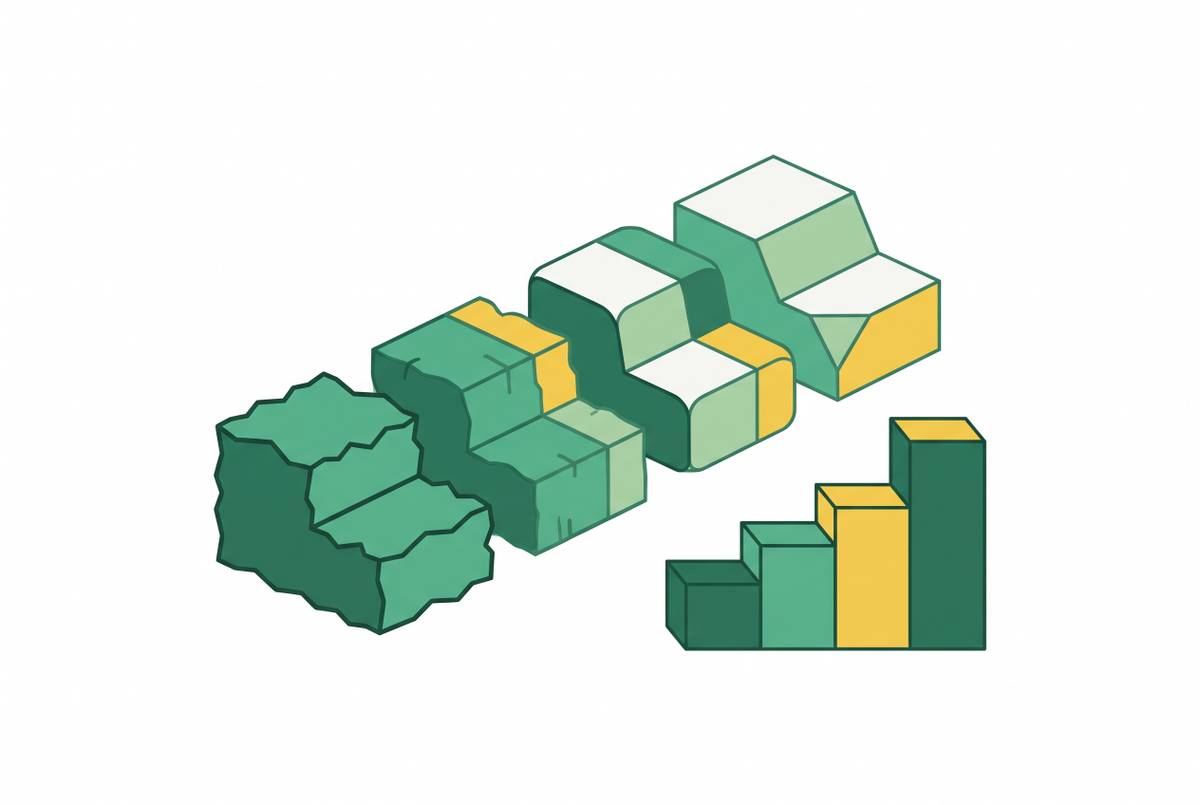
Per-part price drops steeply as quantity rises, while the premium between aluminum and stainless steel becomes proportionally much larger. An engineer who accepts stainless at the prototype stage may therefore underestimate its importance to the production total. The application may require stainless, so changing it may not be an option. Even then, understanding the volume effect allows the production cost to be considered before tooling is committed, rather than discovered after the specification is locked.
How material machinability multiplies cost beyond raw price per pound
The production penalty is not just the difference in the purchase price of the stock. Machinability affects cycle time, tool wear, and finishing requirements. Two candidate materials with similar raw prices can therefore produce very different finished-part costs. One may cost little more to buy but much more to cut.
Aluminum machines quickly, allows high feed rates, and is forgiving on tooling. Stainless steel requires slower feeds, demands more rigidity, and accelerates tool wear. For the same geometry, those differences raise the machining cost of stainless beyond its raw-stock premium. The quote may put that extra cost under machine time or tooling. Yet the material specification still caused it.
The true cost contribution of a material therefore includes the stock purchased, the stock wasted, and the machining-time penalty it imposes. Buy-to-fly compares the material bought with the material left in the finished part. When much of the purchased stock is removed, the engineer pays for material that does not remain in the product and for the time spent removing it. Looking at grades only by price per pound leaves out both costs. To compare materials, each must be costed through the same geometry to the finished part.
Why casting flips the cost architecture and makes material the largest driver from the start
Casting changes where the cost pressure sits. Material is a large part-level cost from the outset rather than a small line that becomes prominent only after CNC setup is spread across a batch. How much it adds to the cost depends on the alloy, market price, part weight, and casting yield. That makes it both substantial and exposed to changes in the price of metal. Tooling, however, can still dominate the total cost at low quantity.
The distinction is between the cost of each casting and the fixed investment needed to produce it. Die casting carries material, labor and overhead, energy, and tooling amortization. At small quantities, each part absorbs a large share of tooling. As quantity grows, that share collapses, while material remains. Dawang Metals identifies alloy type, market price, part weight, and expected yield as the main drivers of material cost in investment casting, with tooling capable of dominating at low volumes.
The sand-casting-to-die-casting crossover makes this logic concrete. Sand casting’s lower tooling cost makes it cheaper until enough parts are made to pay back the higher cost of die-casting tooling, even when material and labor cost about the same per part. Above that threshold, die casting begins to save money. The important contrast with CNC is therefore not that casting escapes fixed costs. It is that casting starts with material already prominent in the part-level cost, while the tooling investment determines how quickly the total price becomes attractive.
How process selection between CNC and casting changes which cost lever matters most
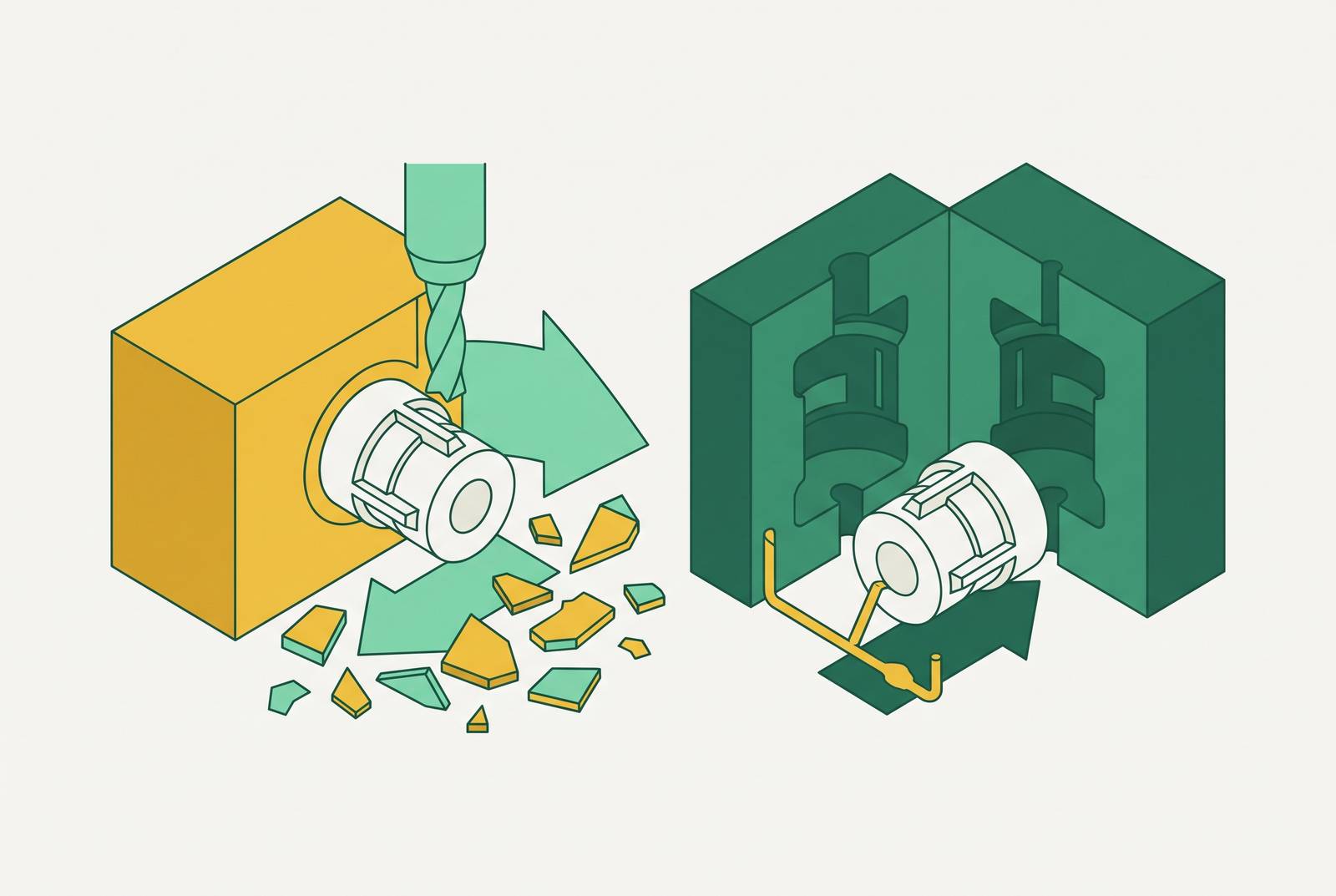
Choosing between CNC and casting means choosing which cost structure the part will carry. At very low volume, CNC avoids the casting tooling investment, even though it still requires its own setup and fixtures. That makes it attractive when there are too few parts to spread the casting tooling bill. At this stage, changing material grade may have a limited effect on the total quote. As more parts are made, stock and machining costs for each part take up more of the total.
At moderate-to-high volume, near-net-shape casting can reduce both material waste and the amount of cutting required. Investment casting followed by light machining can therefore cost far less than machining the whole part from billet. The saving comes from changing what must be bought and what must be removed. RiAlto Manufacturing identifies batch size as the primary CNC cost lever, while Davantech identifies machining time as the biggest cost driver.
Parts whose internal complexity is beyond what casting can make are still candidates for CNC, no matter how many are needed. Parts with uniform walls, consistent cross-sections, and tolerances achievable as-cast are strong casting candidates once quantity justifies tooling. Engineers need to match the expected volume and required geometry to the costs each process can actually remove.
How geometry decisions made in CAD determine material's cost contribution before a quote is ever issued
The best chance to change those costs comes before the design reaches a supplier. Wall thickness, pocket depth, surface requirements, and tolerance callouts determine how much stock is needed and how much work the process must do. Those choices establish much of material’s contribution before a price is attached to it. Design for manufacturability, or DFM, is therefore a cost decision as well as a quality exercise. It is where the engineer can change the reason for the bill.
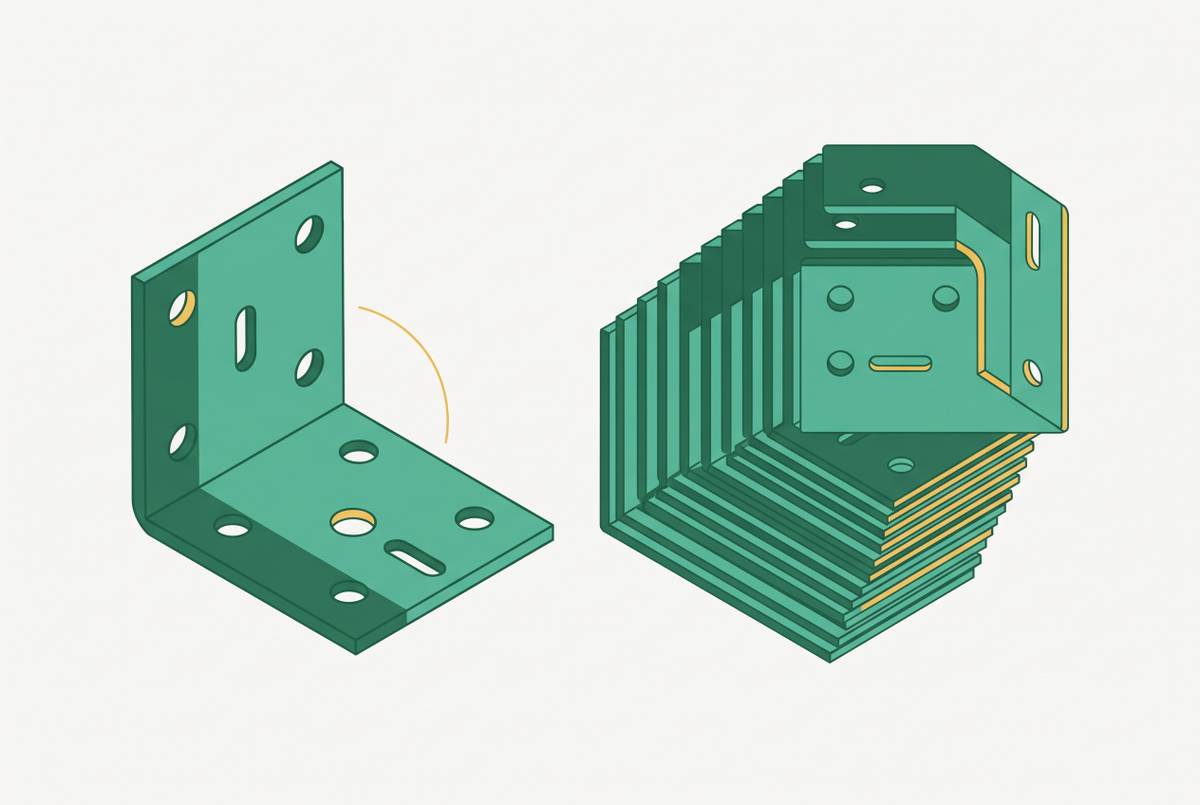
Buy-to-fly makes the connection direct. Deep pockets, thin walls, and the need to remove a lot of material from solid billet leave the finished part weighing far less than the stock bought to make it. A cast-near-net-shape design with machining limited to datum features, bearing bores, and sealing faces can waste much less. A part that meets the same functional requirement can thus have a different stock bill and cost a different amount to machine. Whether that route works must be resolved while geometry and process are still open to change.
Tolerances that are tighter than the part needs to work call for slower cutting passes, more inspection, and often a second finishing pass. These requirements raise machining cost and lower the relative material share, so a smaller material percentage can accompany a higher cost. Makerverse identifies geometric complexity and tolerance band as two of the four levers that move CNC price most. When several vendors review separate pieces of the work without anyone reviewing the full scope, that feedback can arrive too late to change material selection or geometry.
Why a single sourcing partner across the full BOM makes cost-share management practical rather than theoretical
To act on that feedback while the design can still change, one partner must be responsible for the work and able to see the full mechanical bill of materials, or BOM. A CNC shop that looks only at its own work cannot judge whether casting would work or what tolerances the full assembly needs. A casting supplier that looks only at its own work has the same limits. Each may price its own task correctly without finding the better way to make the whole part.
A sourcing partner covering CNC, casting, sheet metal, and finishing under one quote and one purchase order can bring those choices into the same review. Full BOM visibility allows process switching to be assessed against planned volumes and functional requirements. DFM capability at the quoting stage allows geometry changes to be flagged before tooling is cut.
That review also needs an itemized quote, and Da He Precision’s breakdown shows why separate lines for material, setup, machine time, tooling, finishing, and inspection make the relevant lever visible. Accountability completes the arrangement. A partner that inspects every part before shipment and backs quality with a remake-or-refund standard has an incentive to address material and geometry problems at quoting, before tooling investment. Material cost becomes a practical lever when the partner can see the whole job early enough to change it and is responsible for the result.