Sheet Metal Fabrication Cost Drivers at Prototype vs. Production Volumes
Setup costs dominate prototype pricing, but savings plateau much sooner than most engineers expect.
Prototype sheet metal parts routinely cost three to five times more per unit than the same part ordered at production volume. Laser cutting runs $1.50 to $5.00 per cut at prototype quantities and drops to $0.10 to $1.00 at production. CNC bending follows the same pattern: $3.00 to $10.00 per bend at prototype scale versus $0.50 to $3.00 once volume climbs. That spread is not a markup a shop adds because it can. It comes from how fixed work gets paid for.
Every sheet metal part needs the same setup steps before a single cut happens: programming the laser path, setting the press brake, building the flat-pattern nest. That work takes roughly the same amount of time whether the order is for one part or a thousand. At low volume, there's barely anyone to split the bill with, so each part ends up carrying almost the entire cost of work that was only done once.
Three things make this worse specifically at prototype quantities. Second, nesting gets inefficient: small batches leave wide stretches of skeleton metal uncut on the sheet, and since material is bought by the sheet, the buyer pays for metal that never becomes part of anything. Third, prototypes often need an engineer to check in between fabrication steps, which adds labor hours that a production run, with its process already locked down, doesn't need.
Once an engineer sees the mechanism clearly, the price premium stops looking like a vendor problem and starts looking like something that can be planned around.
The three cost buckets that every sheet metal quote is built from
Every sheet metal quote, no matter the shop or the part, breaks down into the same three cost segments. Each one reacts to volume, material, and design choices in its own way, and understanding the split matters because the next sections lean on it directly.
Raw material usually makes up the largest share of the total, often a third to half of the part's cost. Material choice swings this bucket hard: low-carbon steel is the cheapest structural option, aluminum costs more per pound but saves weight, and stainless 304 or 316L carry a real premium along with extra tooling wear. Thickness matters on its own, separate from the alloy. Below 0.8 mm, the thin material needs precision fixturing that slows labor down.
CNC processing is usually the second-biggest bucket: laser path length, the number of bends, and setup time. Each bend needs its own die setup and press cycle, so a part with ten bends can run three to four times the cost of a flat blank with no bends. The cutting method itself is a lever here too: laser cutting is precise and flexible, which makes it the right call for complex or low-volume work, while CNC punching gets more cost-efficient once volume rises and the features stay consistent part to part.
Post-processing and finishing is the bucket engineers most often underbudget. Inspection adds another layer: it typically gets run once per order rather than once per part, so a low-volume order absorbs the full inspection cost without anyone else to share it with.
Order strategy as the cost curve flattens with volume
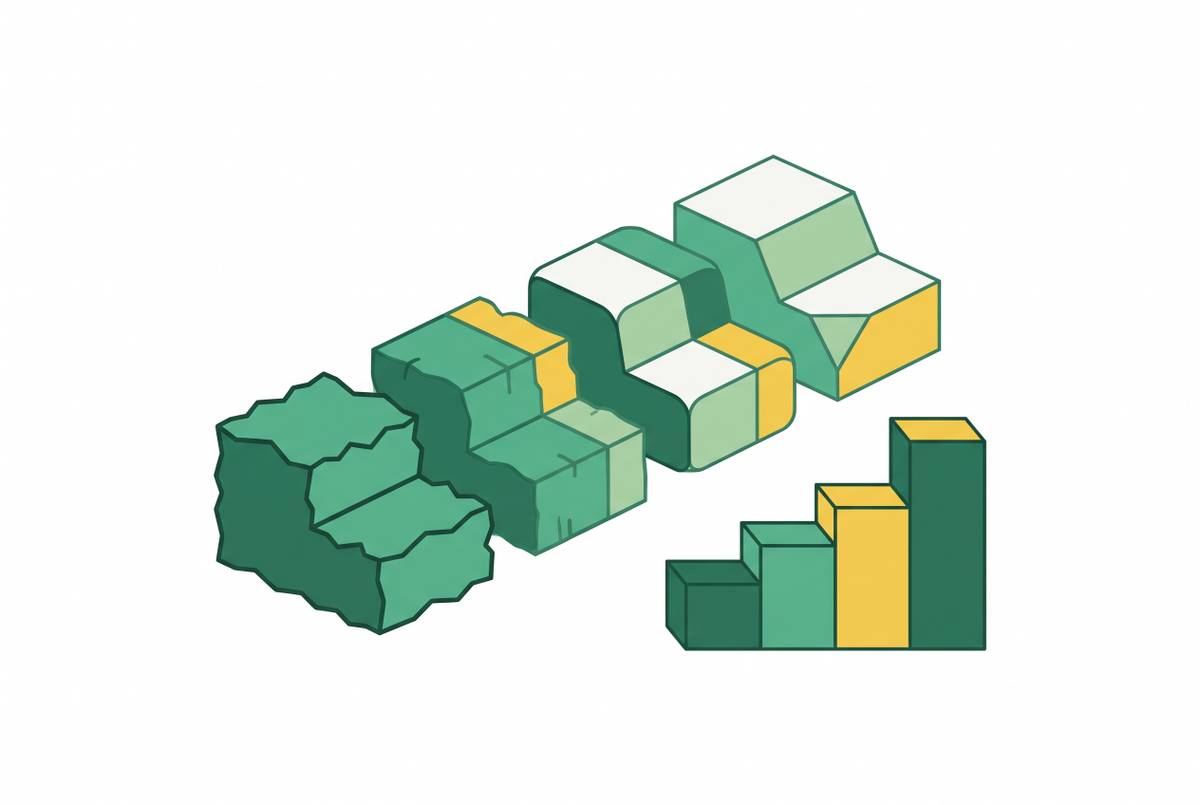
The sharpest per-unit savings in sheet metal fabrication happen early, in the jump from a prototype order to the first few hundred parts. Past that point, the curve goes mostly flat, and chasing bigger and bigger volumes to squeeze out more savings stops paying off the way it did at the start.
This comes straight from the fixed-cost mechanism already laid out. At low volume, setup and programming costs dominate the per-part price because so few parts are splitting the bill. Once that floor is reached, adding more volume barely moves the price per part, because there's no more fixed cost left to spread out.
Stamping shows this pattern in its most extreme form. Above it, the same tooling becomes one of the most cost-efficient processes available. That split is a clear argument for choosing a cutting or forming process based on expected volume from day one, rather than defaulting to whatever process built the prototype.
For an engineer planning an order, the practical takeaway is that reaching high production volumes isn't a precondition for getting most of the cost benefit. A large share of the available savings is visible well before a project hits the volumes most teams think of as "production. This gap matters when you source prototype parts, because a vendor's ability to absorb or shrink that setup and programming overhead changes the per-part price you actually pay. A fast-turn, multi-process supplier such as OneWeekParts consolidates setup work across an entire mechanical BOM, covering laser cutting, bending, welding, and finishing on one platform, which can lower the fixed-cost burden on each part compared with routing the same work through several separate vendors.
Where design decisions lock in cost before the quote
Design decisions made during the CAD phase determine the larger share of the manufacturing cost in precision sheet metal parts. That means the real opportunity to control cost closes long before a quote ever comes back from a shop. Every rule below follows from that single fact.
Bend geometry is the clearest example. Skipping this rule in CAD might still leave the part looking fine in a single prototype, but the defect rate climbs once the same bend runs hundreds of times.
Bend count works the same way. Fewer, more consistent bends mean less setup time per part and fewer chances for a bend to come out wrong.
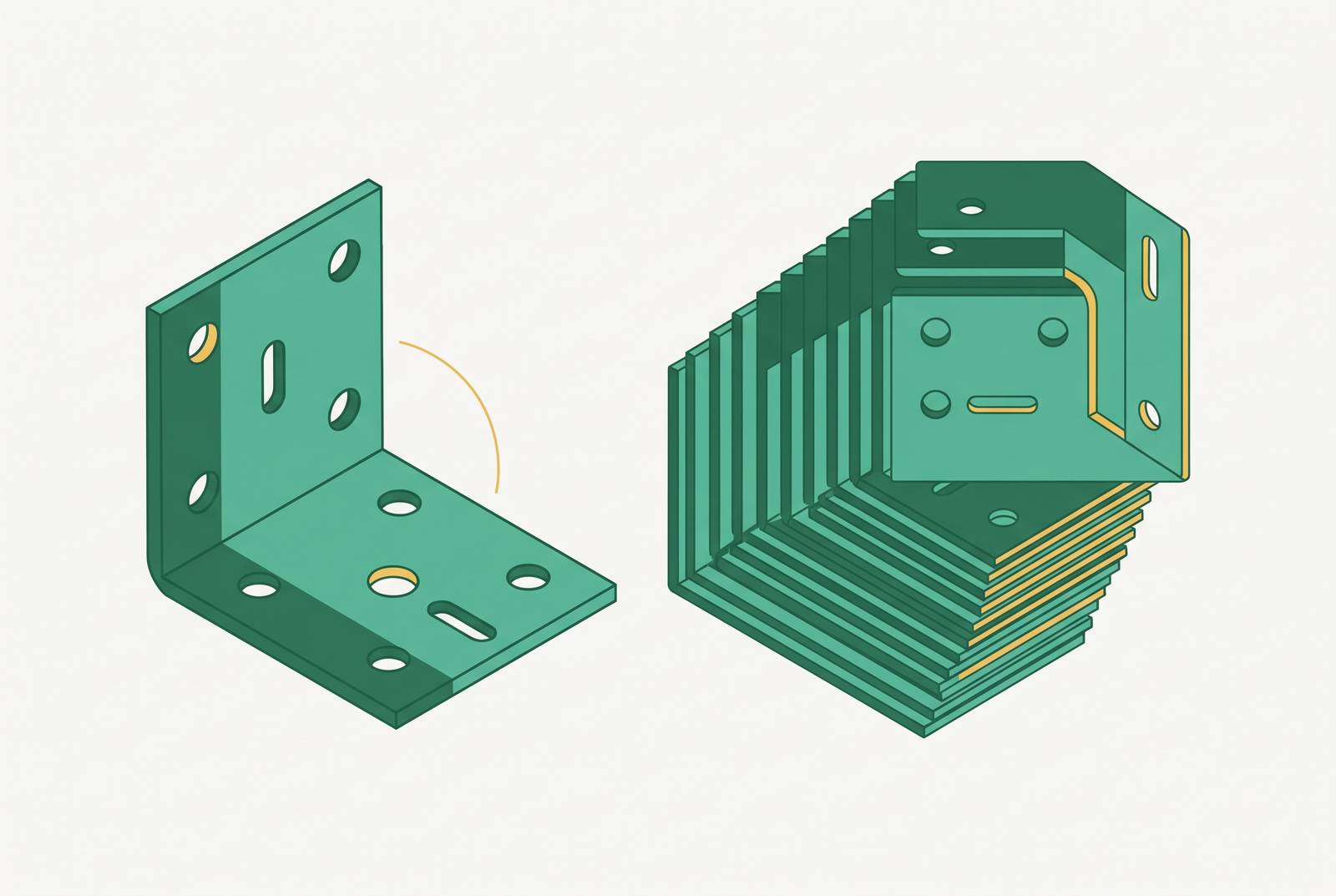
Hole placement near a bend line causes a specific, well-documented failure. A hole placed too close to a bend stretches into an oval shape as the metal forms around it, a defect that's invisible on the CAD screen but appears immediately at inspection. The standard guidance is to keep holes at least twice the material thickness plus the inside bend radius away from any bend location. That one measurement, checked at the design stage, prevents a defect that's expensive to catch after the fact.
Non-standard features carry a similar lesson. One documented case changed a non-standard 5.123 mm hole to a standard 5 mm hole and eliminated the need for a custom tool entirely, dropping that line item to zero. The same logic applies to any feature, odd radius, unusual hole size, nonstandard thread, that forces a fabricator to source or build a specialty tool just for one job.
These rules only pay off when a fabrication partner reviews the design before fabrication starts, not after parts arrive and the defect is already cut into metal. DFM feedback built into the quoting stage catches these issues while they're still cheap to fix, which sets up the next problem: getting that kind of review consistently across a BOM that's split between multiple vendors is much harder than getting it from one.
What fragmented vendor sourcing costs across a multi-process BOM
Routing a multi-process sheet metal BOM through several different vendors creates costs that are structural and predictable, not incidental friction, and those costs are often larger than the unit-price gaps engineers spend their time negotiating over.
Each shop that reviews a drawing adds its own round-trip delay before feedback comes back, and across multiple design revisions and multiple vendors, those delays stack up fast. Rework creates its own bottleneck: when geometry from one vendor doesn't mate properly with a part from another, the two suppliers often dispute whose process caused the mismatch, leaving the engineer to arbitrate a disagreement instead of moving the project forward. And without a shared schedule, one vendor might rush a part through while another holds its capacity back for a bigger client, which breaks the reliability of the whole kit arriving together.
A single, vertically integrated partner removes the gaps between those processes because parts don't sit in a queue waiting to be shipped from one facility to the next, and the partner controls its own schedule instead of depending on outside vendors' availability. A model that runs CAD review through laser cutting, bending, welding, and finishing under one roof produces more consistent parts, shorter lead times, and tighter cost control than a BOM split across separate shops. Quality accountability follows the same pattern. With multiple vendors involved, no single company owns the full build, so when a defect occurs, each vendor can point to the other's process, and any engineering change has to be communicated and implemented separately at every supplier.
The real test is total cost of ownership, not the number printed on the quote. The lowest headline unit price on a fragmented BOM often looks a lot less attractive once rework risk, re-inspection, transit time, and the hours spent coordinating between vendors get counted. Once those hidden costs are added up, the gap between an unqualified low quote and a quote from an ISO-certified supplier frequently narrows to almost nothing.
Finishing, inspection, and quality costs across volume tiers
Finishing and inspection costs don't scale the way cutting and bending costs do. They follow their own logic, driven by batch minimums, rack sizes, and inspection overhead charged per order, and that logic can make these two line items dominate a prototype budget in ways that have nothing to do with how complex the part is or what material it's made from.
Finishing processes like anodizing, zinc plating, and powder coating happen in booths or baths built to hold a full rack of parts. An order of five prototype parts still takes up a rack slot, so it ends up paying for booth time priced for a batch many times larger. Part of that gap comes from volume amortization, and part of it comes from the physical structure of the finishing process itself, since a booth doesn't get cheaper to run just because fewer parts are in it. Switching to a non-standard color adds its own changeover cost no matter the order size, so if you specify an unusual color at prototype volume, you absorb that full changeover cost alone.
Inspection follows a parallel pattern. At many fabricators, quality inspection runs once per order rather than once per part: incoming material checks, in-process inspection, and final dimensional verification all happen a single time no matter how many parts are in the batch. At prototype volume, that fixed inspection cost lands on just a handful of parts. At production volume, the same fixed cost spreads across hundreds or thousands of parts. Standard cut tolerance is ±0.2 mm and standard bend angle is ±1.0°, and stepping outside either default triggers extra inspection work, CMM programming or secondary operations, that adds cost at any volume tier.
The transition from prototype to production adds one more inspection cost that often catches engineers off guard: First Article Inspection. FAI is a formal, documented check confirming that the production process actually produces parts matching every requirement in the design record. Planning for FAI cost at the prototype-to-production handoff keeps it from landing as a surprise line item on the first production quote. For complex formed geometry, 3D scanning of the first-off part against the original CAD model is becoming a useful complement to CMM: CMM measures specific datum-referenced features with high precision, while full-surface scanning catches deviation across the whole part rather than only at the points someone thought to program in advance.
The budgeting fix is straightforward: treat finishing and inspection as fixed costs attached to the order, not as costs that scale cleanly per part. Engineers who specify finishing and inspection requirements without accounting for batch minimums and per-order overhead will consistently come in under their real prototype cost, and modeling these two buckets correctly from the start avoids that gap.
Applying design and sourcing decisions for the most cost leverage at each stage
The cost levers that matter at prototype stage are not the same ones that matter at production stage, and pulling the wrong one at the wrong time wastes effort while leaving real money on the table.
At prototype stage, design decisions carry far more weight than any sourcing negotiation could. Getting that DFM feedback during the quoting process, rather than after parts have already arrived and failed inspection, comes down to working with a partner who builds that review into how quotes get handled rather than treating it as a separate, optional step. Batching a few prototype iterations into a slightly larger run, or nesting multiple design variants onto a single sheet, captures a real piece of the volume discount without requiring a commitment to full production.
At production stage, the leverage shifts toward volume strategy, process selection, and finishing specification. The volume threshold that captures most of the production pricing advantage arrives earlier than most engineers expect, so pushing toward very high volumes just to chase the last few percentage points of savings rarely makes sense once the fixed-cost math has already mostly played out. Standardizing finish specifications and timing finishing batches to line up with rack minimums cuts per-part finishing cost without touching the part's design.
Across both stages, vendor consolidation removes costs that the sourcing structure itself creates: inter-vendor transit time, duplicated QA across multiple shops, and the accountability gaps that appear when no one owns the full build. No amount of DFM work or volume planning fixes those problems if the BOM stays split across separate suppliers. A vendor that handles both sheet metal fabrication and downstream finishing under one quote, as OneWeekParts does with laser cutting, press brake forming, and in-house powder coating, can re-nest a high-scrap job alongside other parts in the same batch window, spreading both the tooling cost and the material loss across a larger effective volume than any single order could manage on its own.