Vacuum Casting Silicone Tooling Lifespan and Part Quality Degradation
Mold lifespan follows a predictable degradation curve that lets you plan which parts to keep.
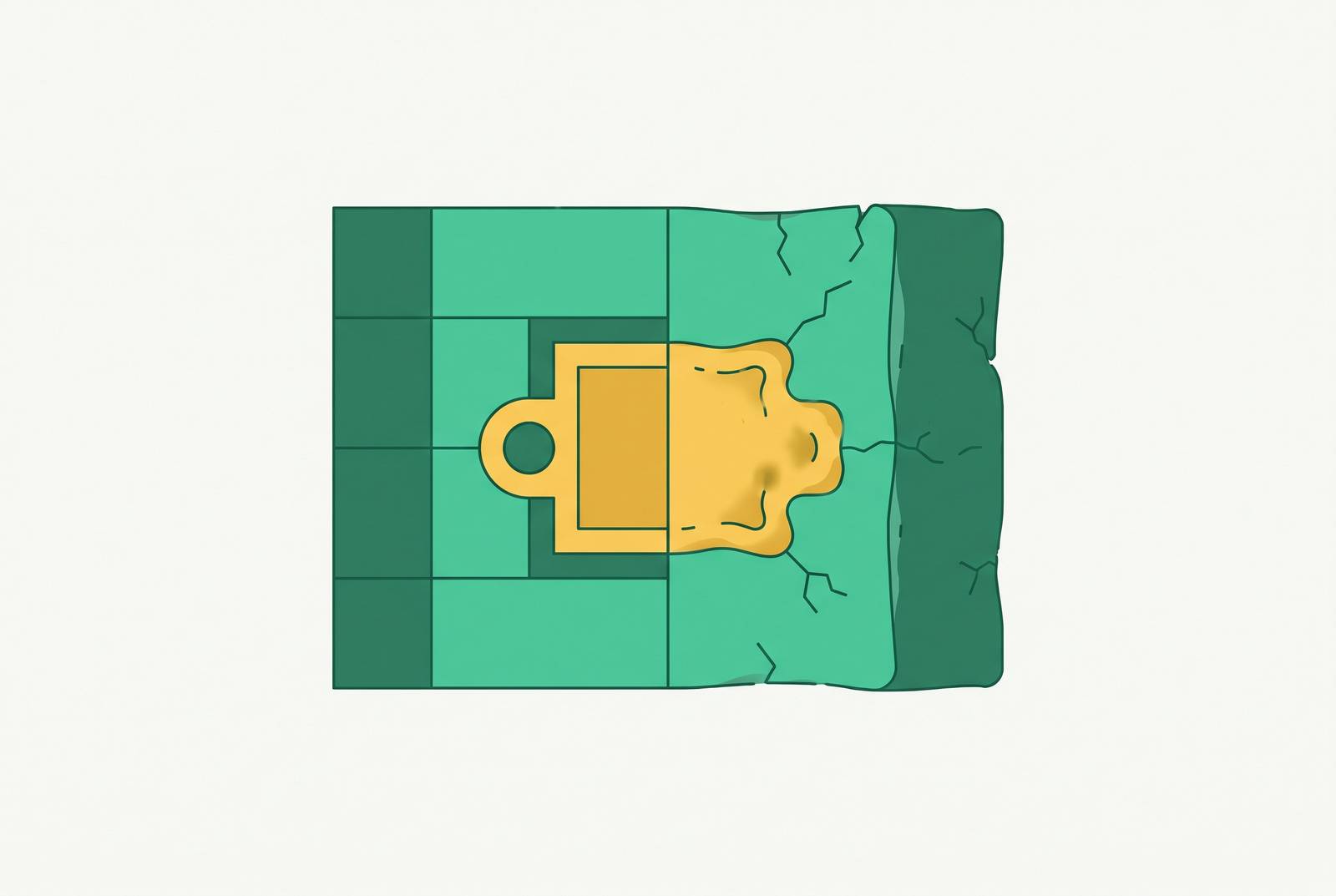
Vacuum casting silicone molds don't fail all at once. They degrade on a predictable arc, moving from tiny dimensional shifts to visible surface flaws to outright tearing, and that arc is well-documented enough for engineers to plan around it. Knowing where a mold sits on that curve tells you when to pull the critical parts, when to expect flash, and when to budget for a new tool.
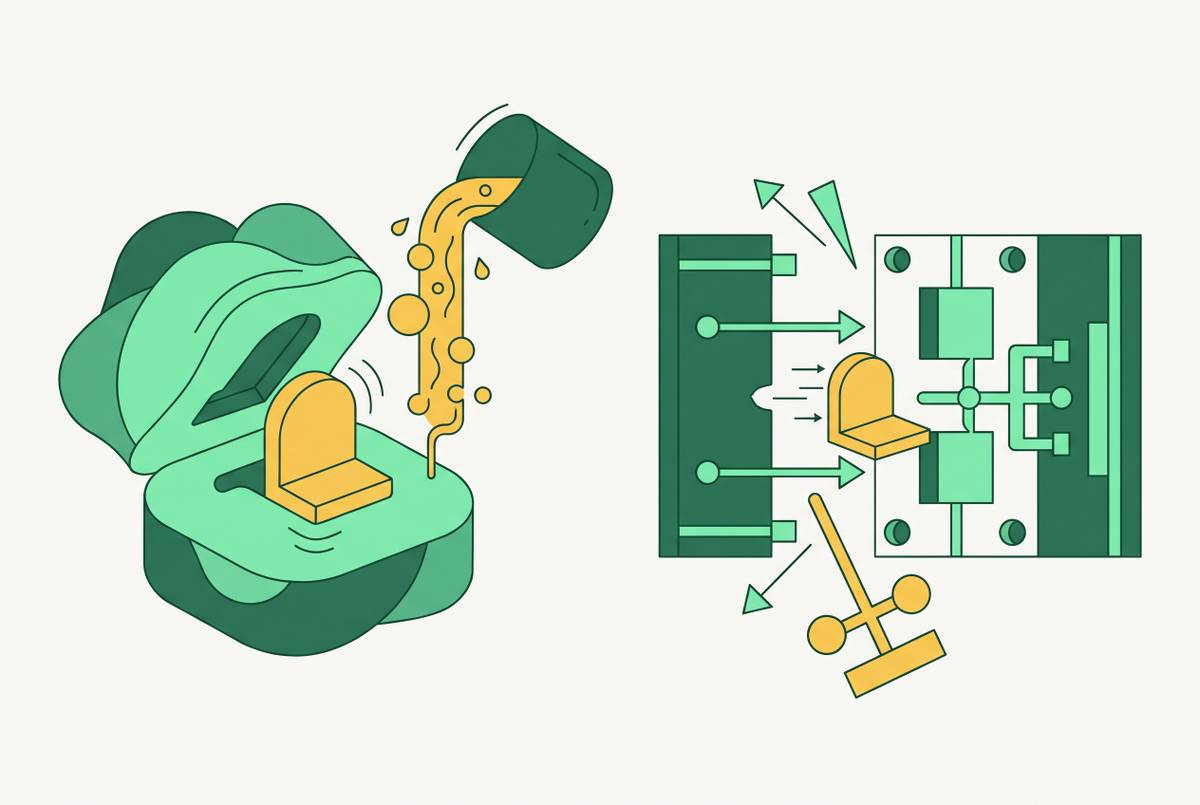
Vacuum casting itself is simple in concept: liquid polyurethane resin gets drawn into a flexible silicone mold under vacuum, usually below 5 mbar, which pulls the resin into every fine detail cut into the master pattern. The mold runs hot, somewhere between 25°C and 40°C during the actual pour, with the tool itself pre-conditioned to about 25°C to 35°C beforehand. Every single shot puts that silicone through a full thermal and mechanical cycle.
That mold is not just a passive cavity sitting there waiting for resin. It absorbs resin components into its surface, off-gasses volatile siloxanes, trades moisture with the air around it, and gets physically stretched and flexed on every demold. Four separate processes, running at the same time, each wearing the silicone down on its own schedule. The lifespan of any given mold is really the sum of all four running in parallel, not any single one of them acting alone.
This is also why vacuum casting occupies a specific spot in product development. It's the bridge between 3D-printed prototypes, which can't capture production-grade surface finish or mechanical properties, and hard tooling, which costs far more and takes far longer to commission. The soft, fast, cheap economics of a silicone mold are the same reason it wears out. You don't get one without the other.
The baseline lifespan numbers and what determines where a mold lands in the range
The number thrown around most often in the industry is 20 to 25 parts per mold. That's the standard planning figure. But the real range is wider: some molds tap out at 10 parts, others push past 30, and the gap between those two outcomes comes down to conditions, not luck. Other sources put the working range at 15 to 25 cycles, or 15 to 30 castings, depending on who's counting and under what process controls. That spread across sources isn't sloppy measurement. It reflects how genuinely variable this process is from shop to shop.
High-temperature vulcanized (HTV) silicone changes the math entirely, stretching potential mold life to 300 to 500 uses. That's not a better-maintained version of a standard mold made with the more common silicone type. It's a different material category, suited to production runs rather than prototyping bridges. And the standard end of the spectrum is moving too: newer high-durability silicone formulations are pushing typical mold life past 40 cycles in some shops as of 2025.
A handful of variables decide where any specific mold lands within its range:
Silicone grade and hardness: RTV-2 silicone in the 20 to 30 Shore A range holds up best against tearing. Move up to 40 to 50 Shore A and you gain durability while also facilitating easier demolding, which suits rigid cast parts well. Cure chemistry: Cure chemistry affects tear strength and longevity, and the choice between tin-cure and platinum-cure silicone is worth confirming with the material supplier for a given application. Resin chemistry: The isocyanate type in the polyurethane resin shapes degradation rate in ways that are covered in the next section. Part geometry: Undercuts, thin edges, and sharp transitions all accelerate tearing at specific points in the cavity. Part hardness: Demolding a rigid Shore 85D plastic part stresses the silicone far more than pulling a soft Shore 40A elastomeric one. Process sequence and elapsed time across the full run, as documented in the broader vacuum casting research literature.
The planning error is quoting a 25-part run and assuming part 25 will match part 1 in quality. It won't. The rest of this piece exists to help avoid that assumption.
The three degradation mechanisms and how they interact
Chemical degradation does most of the damage. Research into vacuum casting degradation has traced the mechanism: the isocyanate component in the polyurethane resin diffuses into the silicone cavity surface with every pour. Once inside the polydimethylsiloxane (PDMS) matrix, that isocyanate reacts with residual moisture and polymerizes into polyurea. Over repeated cycles, those polyurea clusters form an interpenetrating network inside the silicone, and under the mechanical stress of demolding, that network starts generating fissures.
Here's the counterintuitive part. The 2022 Wortmann review in Applied Research found that H12MDI-based resins absorb more isocyanate per cycle than MDI-based resins, yet molds running H12MDI resin actually last longer. The reason: polyurea polymerization with H12MDI proceeds much more slowly, so the stiffening network builds up gradually instead of all at once. Faster absorption doesn't mean faster failure. Slower network formation buys the mold more usable cycles even while it's absorbing more material. Researchers have quantified this chemical shift through measurable changes in Shore A hardness, Young's modulus, tensile strength, elongation at break, and complex shear modulus, all of which move as the polyurea network builds.
Thermal stress runs alongside the chemical process. High-exotherm resins put more heat into the mold per shot than low-exotherm resins, and that heat cycling adds up over a run even at identical part counts. Pre-conditioning the mold and resin to 25°C to 35°C exists partly to keep this variable in check.
Then there's mechanical stress from demolding itself. Every time a part gets pulled, the silicone stretches and flexes, and that cumulative flexing chips away at elasticity over time. Small surface cracks start to appear, and those cracks do double duty: they show up as visible defects on the next part cast, and they act as starting points for deeper tears later. Geometry makes this worse in specific spots. Undercuts deeper than 15 mm and sharp transitions concentrate stress right where the mold is already weakest.
None of these three mechanisms stays in its lane. Chemical stiffening makes the silicone less able to absorb mechanical stress during demolding, which speeds up crack growth, and thermal cycling piles onto both. Wortmann's 2022 work also points out that multiple diffusion processes run simultaneously: resin components moving into the silicone, volatile siloxanes moving out at the surface, moisture crossing in either direction depending on ambient humidity, and non-volatile silicone oil migrating into the resin itself. Mold service life is the output of all of these running at once, not a number you can trace back to just one cause.
How part quality degrades as cast count rises (the sequence engineers need to know)
The first parts off a new mold are the best parts that mold will ever produce. Surface appearance, texture fidelity, dimensional accuracy: all of it peaks early and only moves in one direction from there.
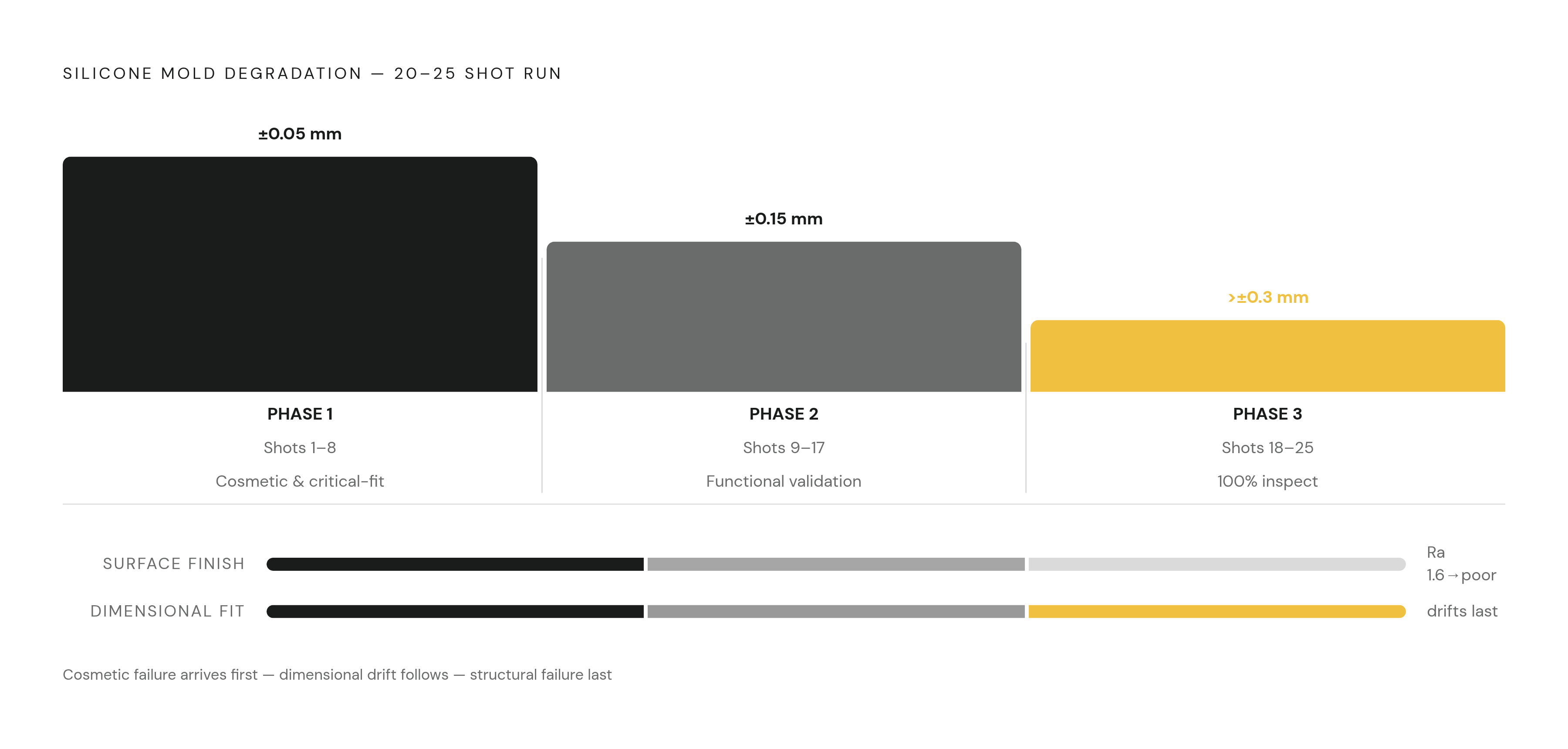
Dimensional drift appears gradually across a run. A part pulled at shot 20 can measure noticeably different from the same mold's shot 1, simply because the cavity itself has deformed under repeated cycling. Standard tolerance for vacuum casting is ±0.3 mm on features under 100 mm, or ±0.3% of nominal size on larger features, but that figure assumes a mold still in good shape. Tighter tolerances (±0.15 mm, and ±0.05 mm under well-controlled conditions) get harder to hold as the mold ages. Shrinkage adds another layer on top of that: urethane resins shrink somewhere between 0.15% and 1%, depending on the vendor and resin family (figures vary across sources here, likely reflecting different resin chemistries), and the silicone mold itself shrinks 0.1% to 0.2% on cure, which has to be built into the master pattern from the start.
Surface finish usually degrades before dimensions drift out of spec. A mold in good condition delivers Ra 1.6 to 3.2 μm surface roughness. As chemical and mechanical wear advance, edge damage and micro-cracks in the mold surface transfer straight onto the part, and once a flaw appears in the cavity, every subsequent part inherits it. Cosmetic failure is often the first quality gate a run trips, arriving before dimensional tolerance gets anywhere near its limit.
Structural failure comes last, and it's terminal. Fissures that started as polyurea clusters propagate under the ongoing stress of demolding until the silicone loses the elasticity it needs to release undercuts without tearing. At that point the mold is done. Parts will show flash, incomplete fill, or surface voids no matter how carefully the process gets run from there.
Porosity sits alongside this arc rather than inside it, worsened by mold condition but not purely caused by it. Internal voids appear in castings when vacuum levels run too low or resin mixing is incomplete, and interestingly, too much vacuum can damage the mold on its own. Calibration matters for the entire service life of the tool, not just at setup.
The order is consistent enough to plan against: cosmetic problems appear first, dimensional drift follows, and structural failure comes last. Not the reverse.
Design decisions that determine how long a mold lasts before quality degrades
Draft angle is the single biggest lever a designer controls over mold longevity. A minimum of 1 to 2 degrees is standard, and 1° to 3° is recommended on any feature with added geometric complexity or on materials prone to deformation during cure. Even on features where the process could technically get away with zero draft, adding it anyway pays off, because the benefit compounds across every single shot in the run.
Wall thickness matters just as much. Aim for a uniform 0.75 to 1.5 mm across the part. Isolated thick sections create local hot spots that raise exotherm stress right at that spot in the mold, and uneven walls invite warpage, which forces the mold to flex more than it should during demold.
Undercuts need real limits. Vacuum casting tolerates undercuts far better than rigid tooling does, but undercuts deeper than 15 mm should be avoided to reduce extraction risk. Undercuts, thin edges, and sharp transitions are exactly where mold life gets spent fastest, because they're where stress concentrates and fissures start.
Corner radii deserve the same attention. A sharp corner in the part design becomes a sharp corner in the mold cavity, and that's precisely where mechanical stress concentrates during every demold. Filleting internal corners gives the silicone room to flex without cracking, extending usable life without changing the part's function.
Fine features like embossed text or logos carry their own rules: minimum 1 mm depth or height and 1 mm width, with draft applied even to these small details to cut down on tearing at the mold's most delicate points.
Resin selection belongs in this list too, even though it's not a geometry decision. Part hardness and resin isocyanate chemistry both shape how fast the mold wears, so picking a resin family isn't just about matching mechanical properties to the application. It's a direct input into how many usable shots the mold has left. Low-exotherm resin options, where mechanical performance allows for them, buy extra thermal-cycle life at no cost to the part.
Using the degradation arc to plan cast quantities, mold budgets, and quality gates
Don't plan a 20 to 25 part run as one uniform batch. Plan it as three phases with different expectations attached to each.
Early shots, roughly the first third of the run, deliver the best dimensional accuracy and surface finish the mold will produce. That's where critical-fit parts and cosmetic hero pieces belong. Mid-run parts still hold acceptable tolerance, though surface finish starts drifting toward the lower end of what's acceptable, making this the right window for functional validation builds. Late-run parts carry the highest risk of both dimensional drift and visible surface flaws. Plan tighter inspection here, or scale back cosmetic expectations, and never send late-run parts to an external stakeholder without measuring them first.
Quality gates should get defined before the run starts, not discovered partway through. Decide up front which features need tight tolerance (±0.05 mm, achievable under well-controlled conditions) versus which can carry general tolerance (±0.2 mm, the general planning tolerance for vacuum casting). For larger parts, get 2D drawings and tolerance requirements settled ahead of time, since dimensional uncertainty grows with feature size regardless of mold age. Watch for drift, edge damage, and cosmetic wear across repeat samples throughout the run rather than checking only the last part off the tool.
Mold replacement is a budget line, not a surprise. Standard silicone molds should get replaced somewhere in the 20 to 25 shot range, with 10 to 30-plus as the realistic bracket depending on the variables covered earlier. HTV silicone belongs in the plan only if the program genuinely needs 300 to 500 units without a retool. Mold cost amortized across a run changes the per-part economics meaningfully as volume climbs, so it's worth knowing the crossover point where hard tooling starts beating soft tooling on cost. Programs needing more than roughly 25 parts from one geometry should budget for a second mold pull from the start rather than treating it as a contingency.
Pot life interacts with mold condition in a way that's easy to miss. Mixed polyurethane resin has a working time of 5 to 20 minutes, and any process variability or delay in a late-run mold eats into that margin before the resin starts to gel.
Inspection cadence should follow the arc, not ignore it. Measure the first castings off a new mold to set a baseline, then re-measure at regular intervals throughout the run instead of only checking parts at the very end. Visible degradation on the mold's interior surface is a leading indicator of trouble ahead, worth acting on before it ever appears transferred onto a part. Late-run parts headed into a functional assembly deserve 100% dimensional inspection, not a sample check.
DFM feedback at the quoting stage catches a lot of this before it ever becomes a mid-run problem. Undercut depth, wall uniformity, missing draft angles: these are quiet decisions that compress mold life without anyone noticing until a mold fails early and a run needs an unplanned second tool. Catching those issues before the first shot gets built is standard practice in vacuum casting programs that run smoothly from quote to final part.
Sources
- What is Vacuum Casting: Process, Advantages, Materials and Specifications
- Vacuum Casting Tolerances & Accuracy | GD-Prototyping
- The Deterioration Mechanism of Silicone Molds in Polyurethane Vacuum Casting | ACS Applied Polymer Materials | ACS Publications
- Evaluation of service life of silicone rubber molds using vacuum casting
- Silicone Mold Life in Vacuum Casting | GD-Prototyping
- Industrial‐scale vacuum casting with silicone molds: A review - Wortmann - 2022 - Applied Research - Wiley Online Library
- researchgate.net
- Silicone Mold Making with Vacuum Casting – Process Guide | Bang Design